FOUND SOUNDS
Anything can be a drum
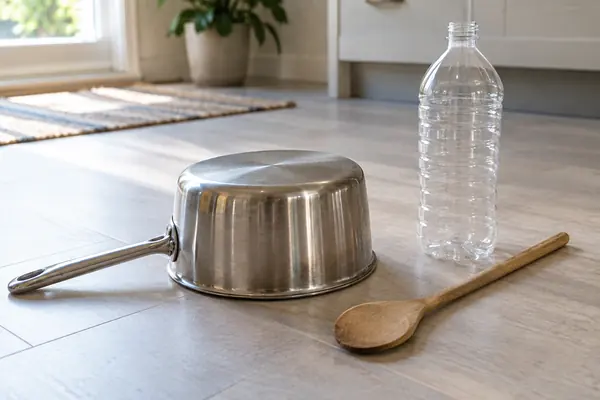
Development Matters suggests offering instruments and 'found objects', such as tapping a bottle on the table or running a twig along a fence.
Ideas to try drumtoy
00WHAT THE GUIDANCE SAYS
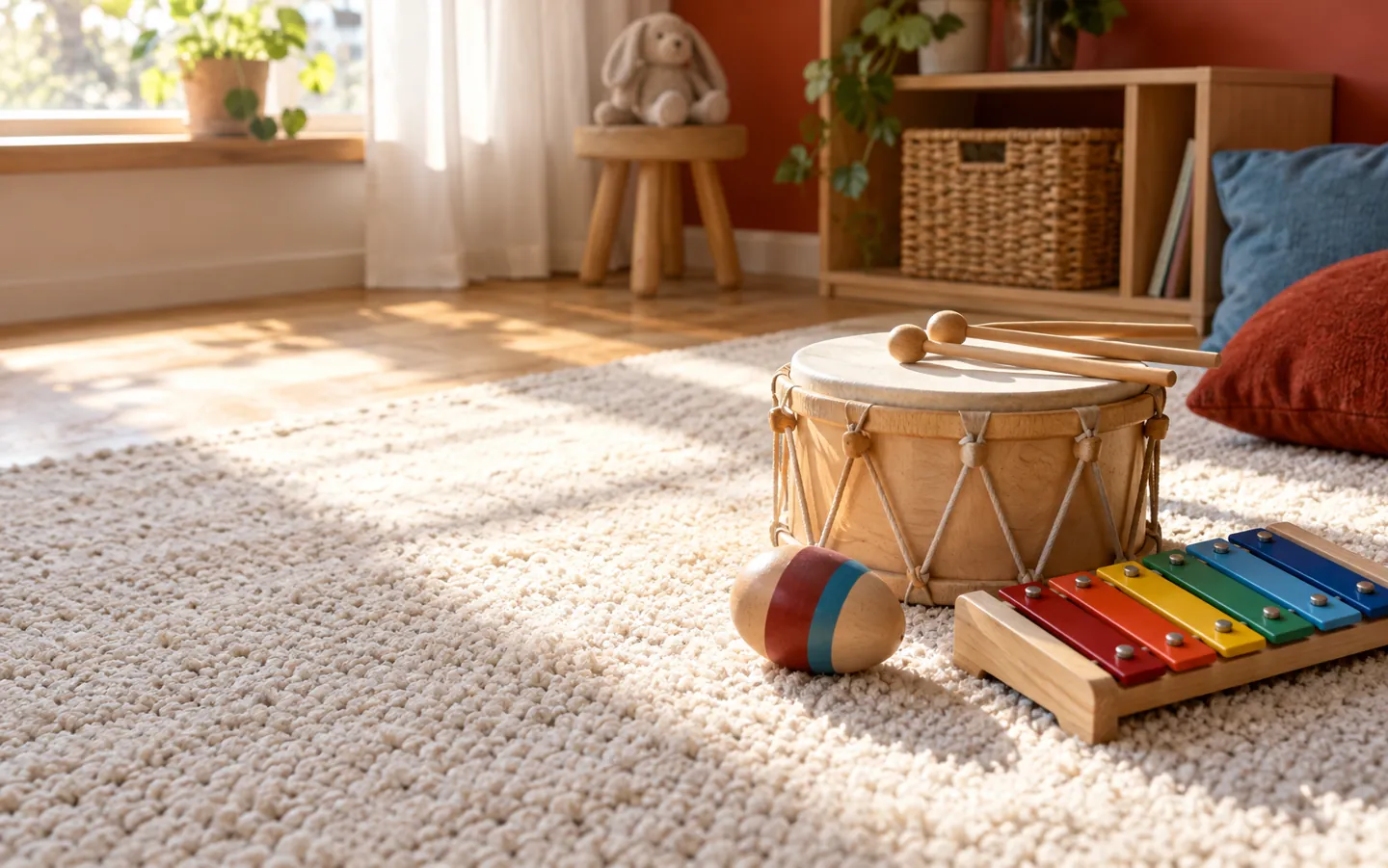
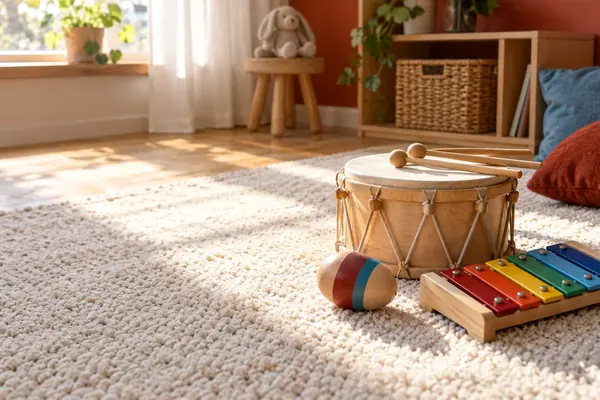
Small children love to make a noise on purpose.
England's early years guidance treats that as the start of music. It describes a path from exploring sound makers as a baby to keeping a steady beat by school age, and research suggests children drum more accurately when a real person drums with them.
Check an age01Principles
02THE SHORT ANSWER
The guidance builds rhythm up step by step.
Research adds one tip: drum with them.
FOUND SOUNDS
Development Matters suggests offering instruments and 'found objects', such as tapping a bottle on the table or running a twig along a fence.
Ideas to tryTOGETHER
In a study of 36 children, those who drummed with a person kept time more accurately than with a drum machine or a speaker.
See the studySTAGES
Babies make rhythmical and repetitive sounds. By reception, adults are asked to notice and encourage children to keep a steady beat.
Check an age03A QUICK AGE CHECK
Pick an age band to see what England's early years guidance says children will be learning in music. The bar shows how much control over rhythm is expected.
Based on Development Matters and the EYFS statutory framework (Department for Education). Every child develops at their own pace; these are broad guides, not tests.
04TWO NUMBERS WORTH KNOWING
One figure from a drumming experiment,
one on where music sits in the early years.
2.5 years
Youngest age that matched a partner's tempo
Children aged 2.5, 3.5 and 4.5 drummed with a person, a drum machine or a speaker. With a person, even 2.5-year-olds adjusted to a tempo outside their natural pace, and all ages synchronised more accurately.
JOINT DRUMMING · KIRSCHNER AND TOMASELLO 2009
7 areas
Areas of learning in the early years
England's early years framework sets out seven areas of learning. Music sits in Expressive arts and design, one of four specific areas alongside literacy, mathematics and understanding the world.
EYFS · DEPARTMENT FOR EDUCATION
A follow-up study by the same researchers found that 4-year-olds who made music together were afterwards more spontaneously cooperative and helpful than children in a matched game without music.
05FOUR WAYS TO PLAY
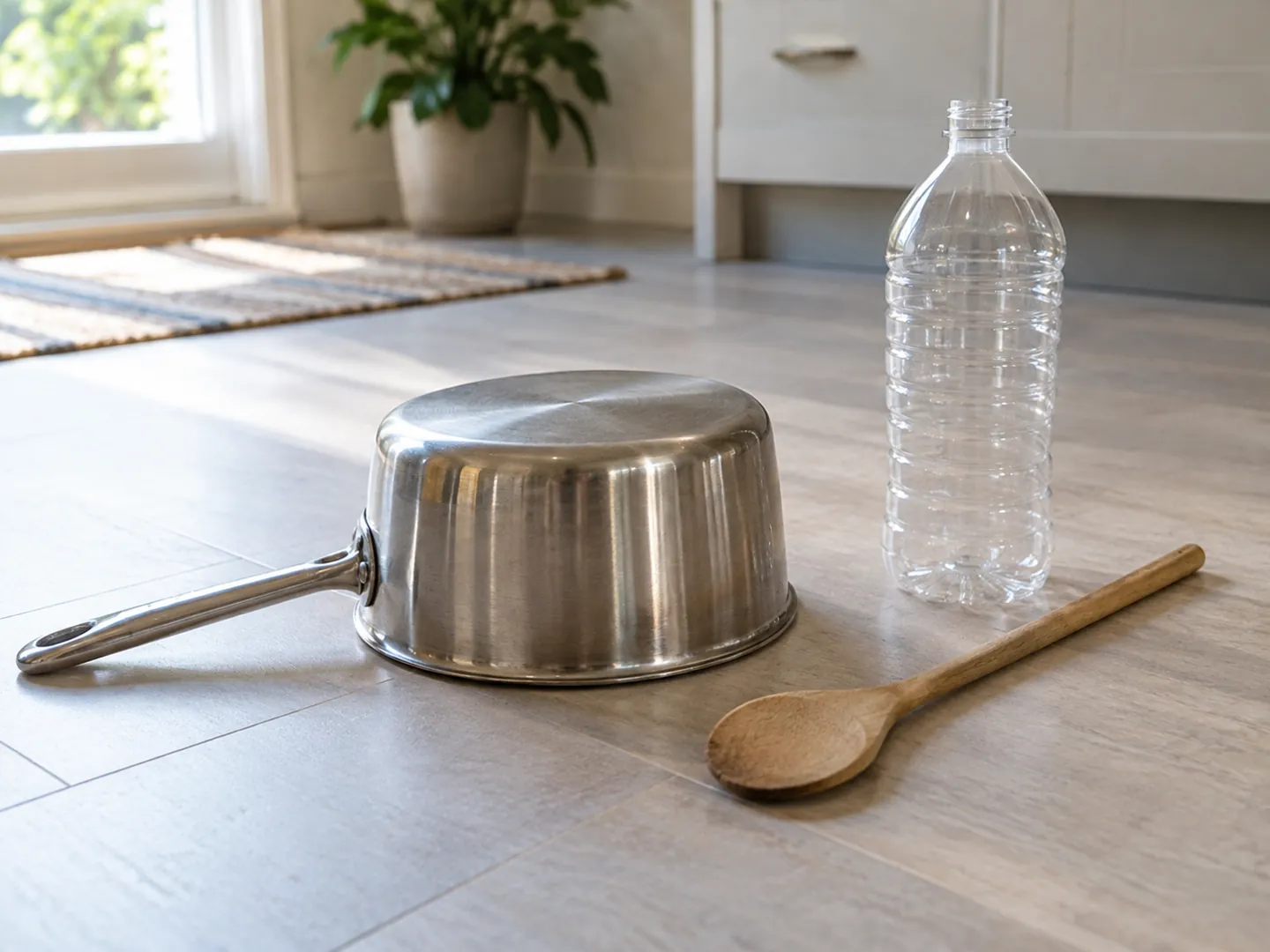
These ideas come from the early years guidance and the drumming research. A toy drum is lovely, but a pan and a spoon do the job.
Tap a bottle on the table or a spoon on an upturned pan, and try different ways of playing each one.
Drum loud and quiet, fast and slow. The guidance lists dynamics, tempo, pitch and rhythm as things to explore.
Sit opposite and keep a beat together. In the study, a live partner helped children keep time better than a machine.
Try movement games where each sound means a move, such as marching to the drum or creeping to the maraca.
06SOUND AND QUIET

Development Matters says babies are born ready to enjoy and make music, and suggests songs for routines, action songs from different cultures and live as well as recorded music.
It also advises minimising background noise and not having music playing all the time, so babies and toddlers can pay attention to the people talking to them.
07Questions
It varies. In one study, children as young as 2.5 adjusted their drumming to a partner's tempo. England's guidance asks reception staff to encourage a steady beat, and by the end of reception expects children to try to move in time with music when appropriate.
Not necessarily. Development Matters suggests a mix of instruments and found objects, such as tapping a bottle on a table or running a twig along a fence.
In the 2009 study, children of all ages synchronised more accurately with a human partner than with a drum machine or a drum sound from a speaker.
A 2010 study found that 4-year-olds who made music together were afterwards more cooperative and helpful than children in a matched activity without music.
Development Matters advises minimising background noise and not playing music all the time, because babies and toddlers need to hear what adults are saying to them.
08Sources
ABOUT THIS NAME
drumtoy.com is part of the DoodleSale portfolio. Check the current listing and available purchase or lease options.